New to Dubai? Important facts & financial information
The laws have changed regularly in recent years and this article is frequently updated to take these into account.
 Your ability to live in the UAE is linked to employment and it is impossible to rent a property (apart from on a short-term basis) without a residency visa and accompanying identity card.
These will be provided by your employer or as part of the package when you set up a trade licence if you wish to have your own business. There are now a few other visa options but you still need one to reside in the UAE.
Having an identity card in mandatory and you will be unable to do many things without it.
You also need a visa and ID card to buy a car, rent a property, get a UAE driving licence, get an alcohol licence – a legal requirement for Dubai residents if you want to buy alcohol anywhere and or keep alcohol in your home. Children require them to attend school.
The rules can vary between emirates, although the main legal issues are correct for all, but this guide is mainly for Dubai residents.
Banking
 People often ask which is the best bank to open an account with but there is no easy answer to that question. Often the bank used by your employer is a good option, particularly if you may want to take a loan to buy a car at some point.
While it may appear that banks want to hand out credit cards or personal loans like sweets please don’t fall into the debt trap that so many do. Interest rates on credit cards are particularly high so although they can be useful, it is best to repay them in full each month. It is important to be aware that non-payment of debts can be a criminal offence with serious consequences. Very serious consequences.
As of January 2022, bouncing a cheque in the UAE is longer a criminal offence unless it was issued in bad faith. If a cheque that you write is rejected due to lack of funds, the payee has the option to open a civil case against you and this can mean that assets can be seized to settle the amount due. The payor can also be subject to fines which increase as the size of the bounced cheque increases.
Do make sure that you read all agreements properly before signing any credit agreements as too often the banks will not explain the restrictions and penalties that apply.
UAE bank accounts are frozen in the event of the death of an accountholder. It is best that husbands and wives have separate accounts, preferably with different banks, so that in the event of one of them dying the other still has access to money. It is not necessary to have a regular salary to open a simple account and several banks have non-salary account options, some of which you can open just by using your phone and uploading a few documents.
Bank accounts are also usually temporarily frozen if the bank is advised that you are changing employment. If there are no loans or debts it will be unfrozen quickly but if you have liabilities it may remain frozen until you prove you have a new job and income to service the debts.
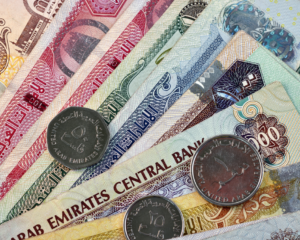 Due to the issue with accounts being frozen it is beneficial to have an offshore account and you don’t need large sums to open one. See here for information: The benefits of offshore banking for expats. This is also a good place to keep an emergency cash fund, the number one priority in sensible money management, especially as the UAE does not provide a safety net to expats.
Retail banks offer poor rates of exchange on currency transfers so you can get much better value for money by using a specialist company. See here: Currency transfers – best value & fully secure
I don’t recommend local currency brokers, largely as there have been major issues with some recently, but work with a company that is properly regulated in the UK, with a Dubai office.
It is sensible to keep to keep a bank account open in your home country as it can be tricky to open one on your return without having been there for several months.
The law of the land
The UAE follows Sharia law and that applies to everyone who lived here, expats and locals, Muslims and non-Muslims alike. This is likely very different to the law in your home country.
Among other things, this means that wills you have written in your home country will not be valid or recognised in the UAE. If you build up assets, or have dependent children you would be wise to take steps to protect them. If you buy a property in the UAE, it is eessential that you arrange a local will as Sharia law always applies to physical property, unless you take the right steps.
The personal status laws were amended in November 2020 and you can read a concise explanation here:
New personal laws in the UAE but what do they really mean for you
Further information here: Where there’s a will, there’s a way to protect your family
The laws that previously prohibited cohabitation have been removed and the latest move is to effectively decriminalizes consensual relationships out of wedlock where a child is conceived. This is still frowned upon but should not result in imprisonment, and birth certificates are now available to unmarried parents with court approval.
Taxes
 Whilst the UAE is advertised to new residents as being tax-free, suggest that to any long-term resident and they will laugh! There is no personal income tax but we pay fees and taxes on a long list of items. VAT at 5% was introduced on most goods and services in 2018.
Be aware that no longer living in your home country doesn’t always mean you are exempt from income tax there.
The rules vary between countries but the onus is on the individual to be aware of the relevant rules.
I advise many British Expats on these issues and Brits need to be out of the UK for at least one full tax year (6th April to 5th April) to be considered UK non-resident for tax purposes in respect of their non-UK earnings.
Employment contacts
First of all, you need a residency visa to work legally in the UAE. For most people this is provicded by their employers, alongside a work permit (also known as a labour card). We have seen an increase in golden visas, where someone has an independent visa, but a work permit is still required as an employee. Note that it is illegal to work on a visit visa.
UAE Labour Law was introduced in 1980, and there have been various updates since then with the lastest significant changes coming into force in February 2022. The new rules apply to all companies apart from those in the Dubai International Financial Centre (DIFC) or Abu Dhabi Global Market (ADGM) as they have separate legislation. Government organisation are exempt although most largely adhere to the rules.
Sadly, far too many companies try and flout the law but there are procedures in place to assist employees. I write about this issues for The National newspaper each week and a link to my column with numerous read Q&A is here: On Your Side column in The National newspaper
This is a broad subject so I just want to touch on a few major points.
 As off 2nd February 2022, all new contracts will be set up on a fixed rate basis but without penalties for resigning before the end of the contract term. All existing contracts of any type, must be amended to this new basis within 12 months of the change of law.
Employment bans have been a feature for people breaking certain contract terms or resigning with short service but these are now rarely seen. The exception is for ‘absconding’ where someone leaves without giving notice and this can result in a one year ban from entering the UAE.
The new employment legislation is designed to be clearer and fairer to employees. Employment is over seen by the Ministry of Human Resources and Emiratisation. A legally binding contract is lodged with them.
Unless you are single and have funds to support yourself for some time, it is unwise to move to the UAE without a job. This is a costly city and there are no guarantees of employment once you are here. Far better to obtain a job before moving and also to have negotiated a decent salary package as pay increases are not common.
Note that your employer is obliged to pay for your residency visa, and any other costs associated with employing you and is not permitted to pass them on to any individual. They are not obliged to cover the cost of you sponsoring your spouse or dependents so you may need to pay for their visas and identity cards.
Self- employment
Many people work for themselves but you cannot simply set up and run a business. You need a trade licence and you are usually looking at paying at least AED 12,000 a year for this, especially if a visa is required. There are different types of companies and licences depending on the type of business you wish to run. There are a number of specialist companies who can assist with setting up a company if you don’t want to do the legwork yourself.
Be aware that undertaking any kind of work, or taking money even for a hobby business is illegal without a licence, as is operating any food business from home for expats. For Dubai residents who already have a residency visa, whether directly sponsored or by a spouse, there is a cheap option that costs in the region of AED 1,400 a year but is only for specific activities, mainly consulting and selling items that you make yourself. This is the DED eTrader licence.
Schools
 Dubai has a wide range of schools, with different curricula. School fees are not cheap however, and tend to increase above the rate of inflation, and salary increases, each year. Ideally you negotiate a salary package that cover school fees, or if that is not possible, you need to fully explore the options and ensure that your income is sufficient to cover the fees and all the add-ons.
For a Western style school, fees vary significantly but average AED 40,000 to AED 60,000 a year for primary schooling and AED 60,000 to AED 90,000 for secondary education. Sixth form fees are higher still.
Medical insurance
For anyone employed on a Dubai residency visa, their employer is legally obliged to provide medical insurance in line with DHA (Dubai Health Authority) rules. Employers are not obliged to provide cover for dependents, and the responsibility lies with their sponsor, usually the spouse or parent who must then arrange suitable insurance, by law.
All policies cover pre-existing medical conditions and include maternity cover. Basic, and cheaper, cover is available for lower paid employees and domestic staff. If you employer a helper, you are responsible to arranging their medical insurance.
There is also mandatory medical insurance for anyone on an Abu Dhabi visa but not for the other five emirates although it has been announced that this is to happen soon. With the cost of treatment, it would be foolish not to arrange decent medical insurance.
Driving
 As soon as you have your UAE residency visa you need to change your driving licence to a local one. For most Western expats this is simply a process of exchanging a licence for a Dubai one, or other emirate depending on your visa.
Note that you can only drive on a home country licence until a visa application is made so you will have a period of a few days where your licence is being converted when you should not even drive a rental vehicle.
Generally, only residents with UAE licences can drive personally owned vehicles. With insurance company permission, some first-degree relatives may be able to do so on a tourist visa.
Driving here can be a little intimidating to start with but most vehicles are automatic so that makes it easier. We recommend that you start by driving somewhere quiet to start with before venturing onto busy roads. Far too many drivers don’t use indicators and drift across lanes so expect the unexpected, drive defensively, and you’ll be fine.
Remember that certain hand gestures are highly illegal (no matter the provocation) and there is a zero alcohol rule when driving.
Life Cover
Is your existing life insurance still valid if you move to the UAE? Not all plans are and even if simple life polices remain valid, often plans with additional benefits such a critical illness cover may not be. You also need to notify your insurer that you have moved abroad.
You can find general information and facts on protection policies in these articles.
Is your family financially protected if you die? Six common errors
How to plan for the worst when living in the UAE
Mortgages and property
If you own a house with a mortgage and plan to rent it out in your absence you will require the permission of your lender and may require additional insurance.
Most expats rent an apartment or villa in the UAE but be aware that rent is usually payable quarterly or half-yearly. Facts on Dubai rental law elsewhere on this website
 When you rent a property in the UAE, please do your own due diligence. Ensure that the estate agent is properly licensed and authorised to deal with rental properties. (See the Dubai Rest app and check on there.) Make sure you have a passport copy of the owner. Both can be verified with Dubai Municipality and Dubai Land Departments.
As mentioned at the start, you need an Emirates Identity card to rent a property on a long-term basis. You may require temporary accommodation at outset and there are plenty of options, on a daily, weekly or monthly basis.
We all pay a Municipality charge of 5% of rent payable (or equivalent if owned) and this is added to the monthly DEWA (Dubai Electricity & Water Authority) bill, or equivalent on other emirates.
If you decide to buy property in the UAE, you must bear in mind that the legal protections are not the same as in the West and this is a far more volatile market. As mentioned earlier, you’ll a will in order to protect your investment.
If you want to buy property in the UK, or elsewhere, while resident in the UAE you can do so and I can make this easier for you as you need to get it right. Not all UK property is the same but the right one, in the right place, is a steady long-term investment. Please contact me for assistance with mortgages or sourcing good investment property. See links HERE
Mobile phones
See this article published 1st August 2023 for useful information on mobile phone contracts.
How to get the best deal on your mobile phone contract
Post
Not really a financial topic but definitely one you need to know. The UAE does not have a door to door postal service as you will find in your home country. Post is delivered to PO Boxes and you can either set up your own or use your employer’s.
Do ensure that you tell friends and family this information as I come across too many cases where people have made assumptions and while some parcels might get retrieved from the Central Post Office, they won’t all arrive.
It is possible, for a fee, to set up your own PO Box, or home delivery service but most people use a work one as all bills are in soft copy. Couriers will delivery to your door – at a price – and there are various ‘drop box’ services that will deliver items to your door from overseas, again at a price.
Useful financial tips
- Watch where you shop. Prices can vary significantly between supermarket chains. Consider buying non-familiar brands as ones from a home country can be pricey.
- There are lots of discount and voucher schemes for cafes, restaurants and attractions and these are commonly used.
- As this is a fairly transient city there are always people leaving and selling furniture and white goods. Bargains can be had if you need to kit out your new accommodation.
- Check out store loyalty cards as these can be worthwhile.
- Do not take on any major commitments at outset. Instead, rent a car, rent a cheaper apartment until you are sure that you will be staying and are sure of your budget
- Avoid all cold-callers trying to sell you financial products, especially 20-25 year savings plans or claiming all property will make you a fortune. It won’t.
- Keep a budget of your expenditure so you get a real idea of where your income is going
- Always keep an emergency cash fund as you never know what is around the corner
There are many more topics that could be covered but that would make for a very long article indeed so this is restricted to the main financial and legal issues when moving to Dubai.
Here’s a handy guide to the money mistakes you really don’t want to make: Living in the UAE. 10 major money mistakes you want to avoid
Article written by admin of British Expats Dubai & UAE, Keren Bobker, an Independent Financial Adviser in Dubai who also writes about life here and on legal, financlal and consumer topics in the UAE media. See this website for more: financialuae.com
©British Expats Dubai